Planned giving – leaving a meaningful legacy of hope
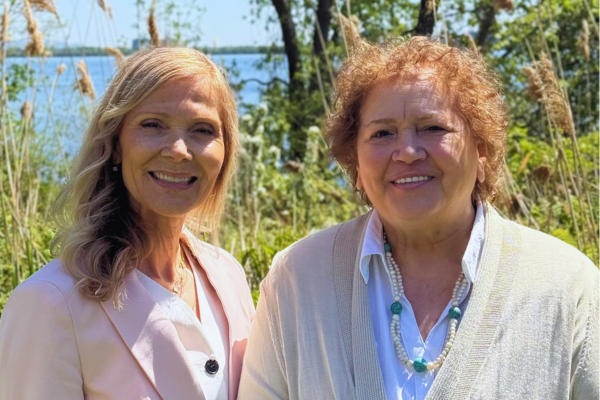
Having practised law for nearly 45 years, a trailblazer and philanthropist, Denise Dussault has always believed in the power of independence and the importance of creating opportunities for others. Today, she is extending that commitment through a bequest to the Lise Watier Foundation, as well as a gift of securities during her lifetime, a lasting expression of values that have guided her throughout her life and career.
Some gestures transcent a lifetime. For Ms. Dussault, whose professional career has been defined by a pioneering spirit, a passion for meaningful challenges, and a steadfast commitment to advancing important causes, her bequest to the Lise Watier Foundation reflects a deeply held desire to create lasting change.
The notion of leaving a meaningful legacy is very important to me,” she shares. “I realized that it was possible to support concrete change today, while also contributing to something that will continue to make a difference long after we are gone. »
The daughter of a politically engaged father with strong social convictions, Ms. Dussault grew up in an environment where integrity and a sense of justice were not abstract values, but everyday ways of being. Her mother would often tell her:
Make sure you are financially independent, that way, you’ll be able to make your own choices, without constraints or obligations. That’s the key to freedom. »
Those words stayed with her throughout her life, and they are at the heart of why the Foundation’s mission resonates with her so strongly.
A gift rooted in conviction
What moves Ms. Dussault about Lise Watier’s journey is precisely this ability to transform personal obstacles into a springboard for others. “Madame Watier had to break not only glass ceilings, but quite literally the sound barrier,” she says with admiration. “What touched me deeply was her determination to transform that experience into concrete opportunities for other women.”
In addition to including the Foundation in her will, Ms. Dussault has taken an immediate philanthropic step by donating shares. A thoughtful decision that combines present-day impact with a lasting legacy. “Social needs are immense,” she explains, “and philanthropy can play an essential complementary role in accelerating positive change.” For her, these two forms of generosity stem from the same philosophy: a commitment to solidarity among women, experienced as both a responsibility and a deeply held conviction.
Planned giving: what does it mean in practice?
A bequest, also known as a planned gift, involves designating a charitable organization as a beneficiary in one’s will. Unlike a gift made during one’s lifetime, it takes effect upon the donor’s death and has no impact on their assets or quality of life during their lifetime. It is a flexible decision, which can be modified at any time, and does not require great wealth: anyone who writes a will can choose to include a cause close to their heart.
Accessible to all, a bequest is not abiut the size of one’s estate, but about intention. Above all, it is an act of generosity and a way of passing on one’s values, creating a meaningful, lasting legacy for future generations.
In practical terms, it is simply a matter of naming the beneficiary organization in the will, specifying its full legal name, and indicating the nature of the bequest: a fixed sum of money, a percentage of the estate, a specific asset, the residue of the estate after distribution to heirs, or certain financial assets. To ensure that your wishes are clearly expressed and fully respected, it is recommended that you consult a notary or an estate planning specialist.
Tax benefits: an often overlooked advantage
In Canada, a bequest to a registered charity generates a tax receipt issued in the name of the estate. This tax credit can be applied to the year of death or the preceding year, allowing for a significant reduction, or even elimination, of taxes owed on capital gains or income accumulated in the estate. Depending on the size of the bequest, the resulting tax savings can be substantial, ultimately benefiting the estate’s other heirs.
Gifts of securities: a capital gains benefit worth knowing
A gift of securities offers an additional advantage: when publicly traded securities are transferred directly to a registered charity, rather than sold with the proceeds donated, any capital gain realized is entirely exempt from tax. The donor still receives a tax receipt for the full fair market value of the securities at the time of transfer.
In all cases, a financial planner or tax advisor will be able to assess the strategy best suited to each individual’s personal and estate situation. The process is more accessible than most people imagine, and its impact can be considerable.
A message to those who are hesitating
To those considering a planned gift but not yet ready to take the step, Denise Dussault offers a simple message: “Don’t hesitate to start reflecting on it. People sometimes imagine this kind of process is complicated, when in fact there are now many tools and resources available to guide people through it simply and with peace of mind.” She also notes that financial planners are well positioned to explain the significant tax advantages that come with planned giving and gifts of securities.
For Ms. Dussault, philanthropy is not a one-time gesture, but a way of passing on values and contributing to something greater than oneself. “When a woman gains confidence, autonomy, and financial independence, it is often entire families and communities that benefit,” she concludes. A legacy that, much like her career, aims to open doors where others had not yet thought to look.
Would you also like to include the Lise Watier Foundation in your philanthropic planning? Contact us, we would be delighted to guide you through the process.